Introduction
In high-stakes scenarios, whether on the street or the competition line, the ability to quickly and safely draw your firearm can determine the outcome. The pull-from-the-holster drill is one of the most essential handgun training exercises—yet many gun owners overlook it.
In this blog, we’ll break down:
- The purpose and intent behind the holster draw
- What target times you should aim for
- How to improve your draw speed through dry fire and live fire
- What equipment helps or hinders your success
Let’s sharpen your draw and make sure you’re ready for the moment that matters most.
Why the Draw Matters
Your draw time is the bridge between awareness and action. If you’re too slow—or sloppy—nothing else matters.
For defensive concealed carriers, a clean draw can mean survival. For competitive shooters, it’s the first step toward winning. Regardless of your reason for training, developing a safe, smooth, and fast draw stroke is a foundational skill every handgun shooter must master.
Purpose and Intent of the Pull-from-the-Holster Drill
The pull-from-the-holster drill exists to build:
- Speed: Get the gun into action quickly
- Consistency: Execute the same motion every time
- Control: Maintain safe muzzle discipline and proper grip
- Precision: Align sights and fire with purpose
Tactical Intent for Defensive Shooters
In a real-world self-defense encounter, you’ll need to:
- React instinctively
- Clear your cover garment under stress
- Deliver an accurate first shot in under 2 seconds
This drill trains your body to do all of the above without hesitation.
Breaking Down the Draw Stroke
A great draw stroke is efficient, fluid, and reliable. Here’s how it breaks down step-by-step:
Step 1: Establish a Master Grip
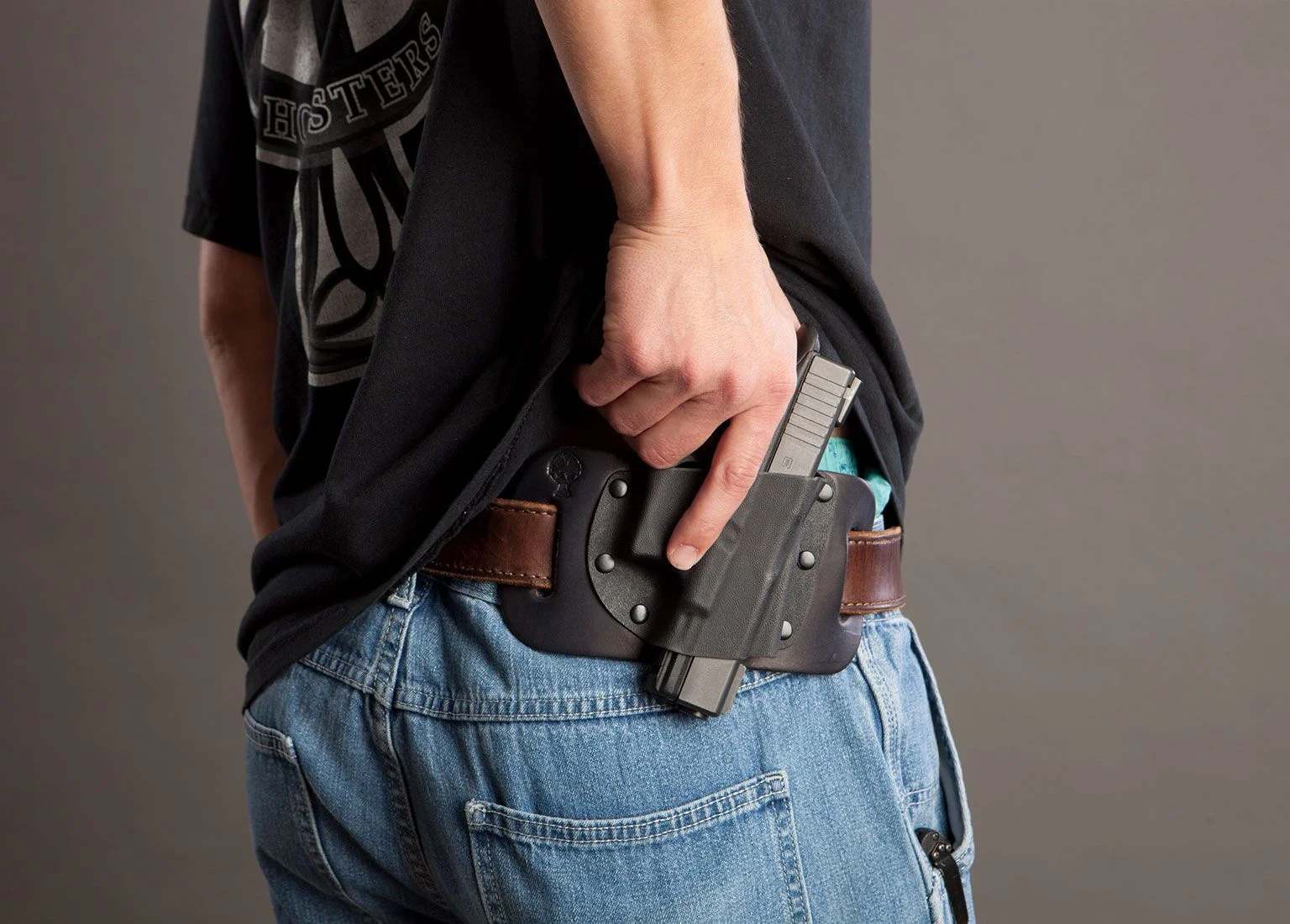
Grab the gun in the holster with your dominant hand. Your grip should be final—no re-gripping after the draw.
Step 2: Clear the Holster
Lift the pistol straight up until it clears the holster mouth. Keep your trigger finger indexed on the frame.
Step 3: Rotate to Horizontal
Rotate the muzzle forward at chest level—this is your retention position and allows close-quarters control.
Step 4: Merge Hands and Extend
Bring your support hand to the gun and push out in a straight line to eye level.
Step 5: Align Sights and Press
Acquire the front sight, confirm your sight picture, and press the trigger smoothly.

“Step-by-step breakdown of a handgun draw stroke from holster to full presentation.”
Target Times and Performance Benchmarks
How fast should you be? That depends on your experience level and whether you’re drawing from concealment or open carry.
| Skill Level | Draw Type | Target Time (First Shot) |
| Beginner | Concealed | 2.5 – 3.0 seconds |
| Intermediate | Concealed | 1.75 – 2.25 seconds |
| Advanced | Concealed | 1.0 – 1.5 seconds |
| Competitive Elite | Open Holster | 0.7 – 1.0 seconds |
Use a shot timer to track performance consistently.
Common Mistakes to Avoid
Even experienced shooters fall into bad habits. Here are frequent draw stroke errors:
- Fishing for the grip (slows everything down)
- Sweeping yourself or others with the muzzle
- Premature trigger contact (before sights are aligned)
- Over-extending without a stable grip
- Inconsistent mechanics (from rep to rep)
Correct these with slow, deliberate practice before adding speed.
Dry Fire Drills to Improve Draw Speed
Dry fire is the best way to build muscle memory without ammo cost.
ENSURE YOU REMOVE AMMUNITION FROM THE FIREARM BEFORE DRY FIRING. Otherwise its a live fire.
1. Dry Draw Repetitions
Setup: Use your carry rig and confirm the firearm is unloaded.
Execution: Draw and present to full extension. Pause. Check your grip and sight picture. Reset and repeat.
💡 Reps: 25–50 per session, 3x per week.
2. Mirror Check Drill
Draw while facing a mirror to monitor hand movement, posture, and presentation angle.
3. Wall Drill with Draw
Stand close to a wall and draw to extension without touching the wall. It forces a straight draw stroke and prevents flinching.
4. Timer Practice
Use a timer app with a random delay. Try to beat your personal best without sacrificing safety or form.
Live Fire Drills for Faster, Cleaner Draws
Once dry fire mechanics are dialed in, transition to live fire.
Drill: 1-Shot Draw from Holster
Target: 8-inch circle at 7 yards
Goal: Beat 1.5 seconds to first hit with accuracy
Tips:
- Record each rep with a timer
- Focus on drawing cleanly, not just fast
- Reset to the exact same start position every time
Drill: Bill Drill (6 Rounds from Draw)
- From the holster, fire six shots on target as fast as possible
- Track first shot time and overall speed
- Focus on recoil control after the draw
Equipment Considerations
Holsters
Use a high-quality Kydex holster with:
- Full trigger guard coverage
- Proper retention
- Secure belt attachment
Avoid floppy, generic, or soft fabric holsters.
Remember, every level of retention on your holster is one more obstacle you need to overcome in order to draw your firearm.
I use the G Code Shadow Eclipse Holster personally. I have two, one of them has lasted well over a decade and is still being used for my .40 S&W M&P Shield. Today I use the G Code Shadow Eclipse Holster with a 9mm S&W M&P Shield and this one will support an optic mounted pistol.
Belts
A rigid gun belt is a must for draw consistency.
Clothing
Train with what you actually wear. That hoodie, jacket, or cover shirt adds time and complexity to your draw.
Use a Shot Timer to Track Progress
A shot timer is the most valuable tool for improving draw speed.
Top Timer Picks:
- Competition Electronics Pocket Pro II
- PACT Club Timer III
- SPLITS or RangeTech Bluetooth Timer (for smartphones)
Track:
- Time to first shot
- Total drill time
- Split times for multi-shot draws
Call to Action: Practice with Purpose
Improving your draw is about more than speed—it’s about building confidence, safety, and readiness.
👉 Start today:
- Record a baseline draw-to-first-shot time
- Begin a weekly dry fire routine
- Integrate live fire once your draw is smooth and safe
Every tenth of a second you improve could be what saves your life or wins the match.
Are you ready to upgrade your draw speed?
Leave a comment with your fastest clean draw time and what gear you use!
🔗 For more training tips and gear recommendations, subscribe to our email list or follow us on Facebook, Rumble and YouTube.